Whether your AI project needs an accredited ethics committee, a local review or neither depends on what you do with patients and their data. Alongside those formal approvals, your team should work through the ethical risks of what you are building.
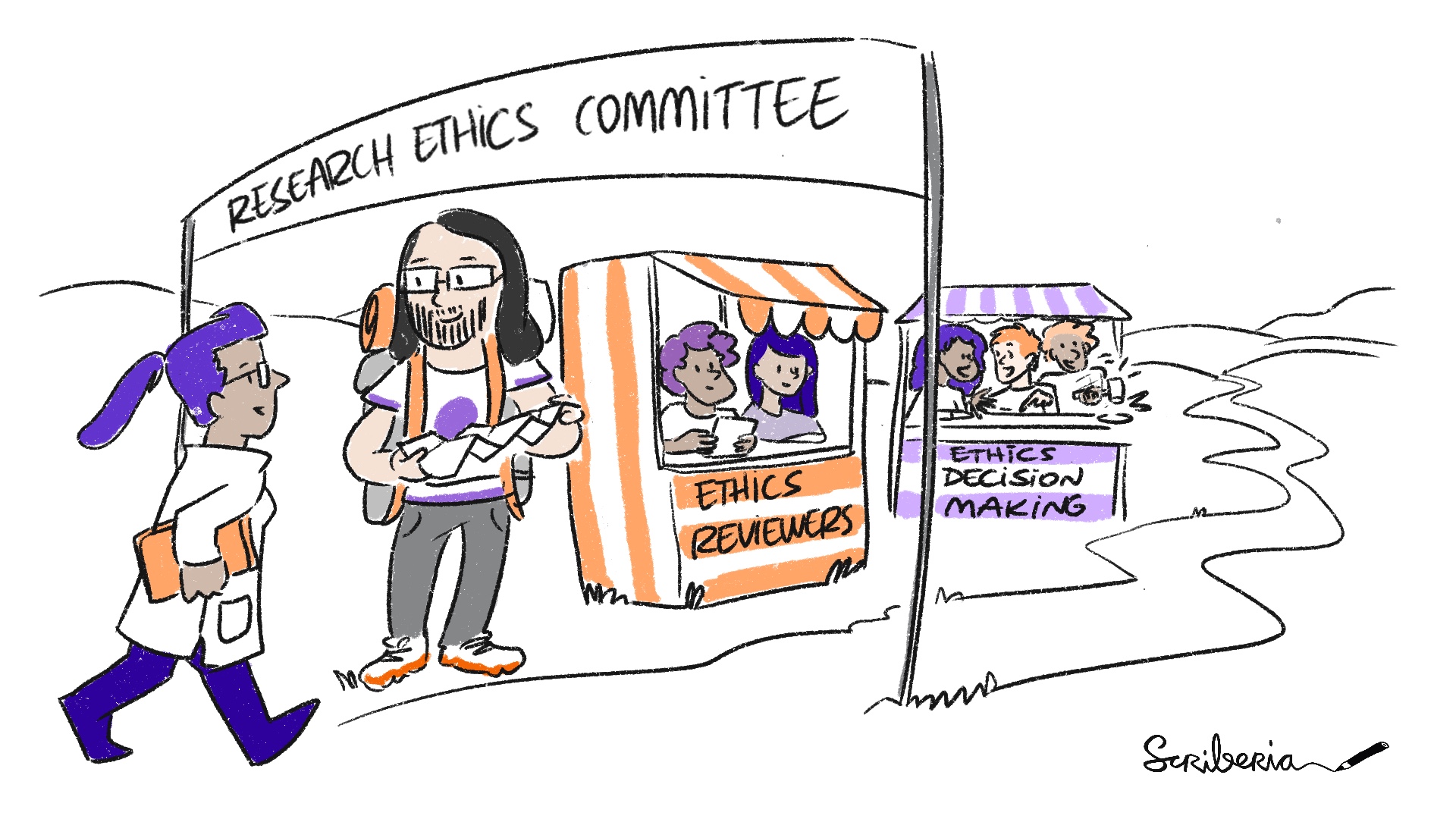
Figure 1:The Turing Way Community. This illustration is created by Scriberia with The Turing Way community, used under a CC-BY 4.0 licence. DOI: 10.5281/zenodo.3332807.
What ethical review is
Ethical review asks whether a project respects the autonomy, dignity and rights of patients and participants, keeps harm low and benefit high, shares benefits and risks fairly, and is open and accountable. For AI, it covers two things: the use of patient data during development, and the clinical use of the finished tool.
What requires which review
Rules differ by country. In the Netherlands, the dividing line is the Medical Research Involving Human Subjects Act (WMO).
| Situation | Review needed in the Netherlands |
|---|---|
| Research in which people are subjected to procedures or have to follow rules of behaviour, for example a prospective study that collects extra measurements or a trial that changes care based on the tool | WMO research: review by an accredited medical research ethics committee (METC), under oversight of the CCMO |
| Research on existing data only, such as retrospective EHR data for model development | Usually non-WMO research: the institution’s local review procedure, plus a legal basis for the data (see legal and regulatory considerations) |
| Putting a CE-marked tool, or a tool made under the MDR in-house exemption, into routine care | Not research, so no METC; the hospital’s own governance for introducing medical technology, for example under the Convenant Veilige Toepassing van Medische Technologie in de medisch specialistische zorg |
| Development on fully anonymised public datasets or synthetic data | Often no formal review, but record your reasoning |
If you are unsure, ask your institution’s METC or research office early. They can tell you whether your study falls under the WMO, and a late answer can stall the whole project.
Application-specific ethical issues
Healthcare AI raises ethical questions beyond standard research ethics. Work through them at the design stage.
| Ethical concern | Questions to ask |
|---|---|
| Autonomy | Does the tool undermine patients’ ability to make informed decisions? Do patients know it is used? |
| Discrimination | Could the tool give worse results for some groups? Why? |
| Consent | What do patients need to know, and agree to? Does existing consent or a legal exception cover secondary use of their data? |
| Accountability | When the tool is wrong, who is responsible? |
| Dependency | Will the tool create a dependency that is hard to reverse? What happens if it fails or is withdrawn? |
| Loss of human contact | Does the tool reduce personal contact in care in ways that matter to patients? |
| Environmental cost | What energy and carbon does training and running the tool cost? |
Working with ethics committees
Contact the committee before you write the full application.
Ask which type of review applies to your project.
Prepare a short lay summary of what the tool does and what could go wrong.
Describe your data governance: storage, access control and data minimisation.
Say what will happen to participants’ or patients’ data when the project ends.
- van Hilten, M., Ryan, M., Blok, V., & de Roo, N. (2025). Ethical, Legal and Social Aspects (ELSA) for AI: An assessment tool for Agri-food. Smart Agricultural Technology, 10, 100710. 10.1016/j.atech.2024.100710